Forney City Council Approves One-Acre Minimum for New Residential Developments
Forney City Council Initiates One-Acre Minimum for New Residential Development
The Forney City Council is taking a firm stance on the future of local growth, moving to significantly increase the space required for new homes. In a special meeting held on December 16, 2025, the council voted unanimously to initiate a text amendment to the city’s zoning ordinance that would establish a one-acre minimum lot size for all new single-family residential zoning.
This decision represents a pivotal shift for a community that has seen rapid, high-density suburban expansion over the last decade. By directing the Planning and Zoning Commission to move forward with this standard, city leaders are signaling a desire to slow the pace of development and preserve the semi-rural character that many residents feel is disappearing.
Unanimous Vote for Lower Density
The council’s action specifically targets the City of Forney Zoning Ordinance. The motion, which passed 6-0 with Mayor Pro Tem Greg Helm and Council Members James Traylor, Cecil Chambers, Jay Weatherford, Sarah Salgado, and Zahnd Schlensker in favor, instructs the Planning and Zoning Commission to draft a plan for implementation.
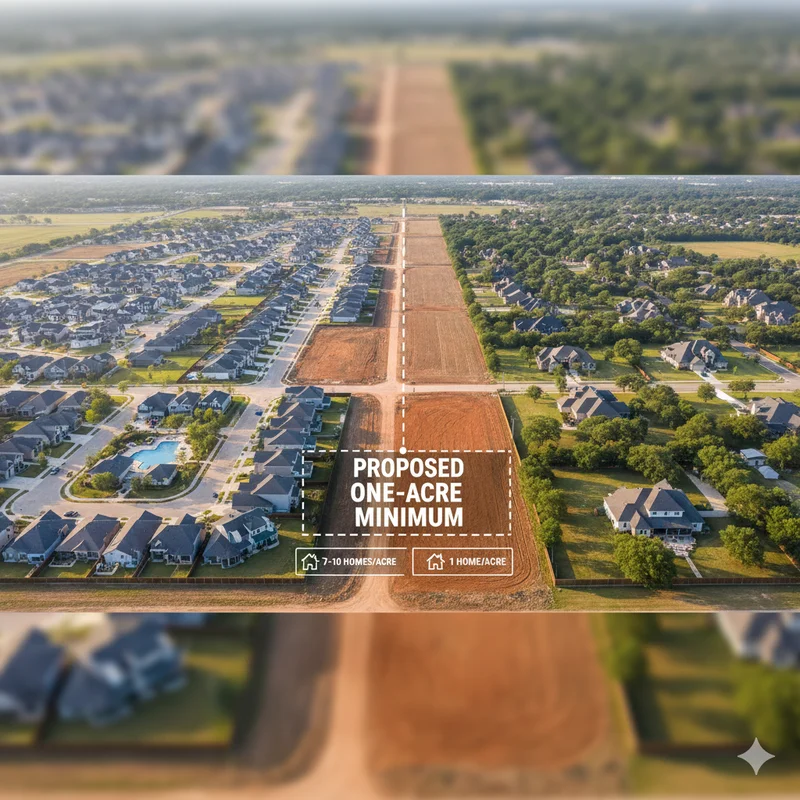
The primary goal is to shift away from smaller, high-density lots and toward a "one-acre standard." For residents, this means that future neighborhoods within the city limits would likely feature fewer homes spread across more land, a stark contrast to the master-planned communities currently lining major corridors like FM 548.
Infrastructure and Service Demands
A driving factor behind the move is the increasing strain on city infrastructure. During the session, discussions highlighted how dense developments place immediate and heavy demands on local roads, water systems, and emergency response services.
By increasing the minimum lot size, the city effectively reduces the total number of households that can occupy a given area of land. While this limits the immediate population growth, it also aims to reduce the long-term maintenance burden on taxpayers. Larger lots often correlate with higher home values, which can bolster the property tax base without the same level of service demand required by high-density housing.
Balancing Development Rights
The transition to a one-acre minimum does not happen overnight. Under Texas state law, this proposed text amendment must now go before the Planning and Zoning Commission for a public hearing. Following their review and recommendation, the item will return to the City Council for a final public hearing and official adoption.
It is important to note that this change would apply to new zoning requests. Developments that have already been approved or are currently "vested" under previous rules would likely continue under their existing lot size requirements. However, any landowner seeking to rezone property for new residential use in the future would be required to meet the new, stricter standards.
What Happens Next
The Planning and Zoning Commission is now tasked with creating the framework for this transition. This includes determining how the new standard will integrate with existing land-use plans and whether any specific exceptions will be allowed for unique property layouts.
Residents can expect public notices for upcoming hearings at City Hall, where community members can provide feedback on the proposal before it becomes law. The outcome of these meetings will ultimately define the visual and geographic landscape of Forney for the next generation.
How do you feel about the shift toward larger lot sizes? Does the potential for higher home prices outweigh the benefits of slower growth for Forney?