
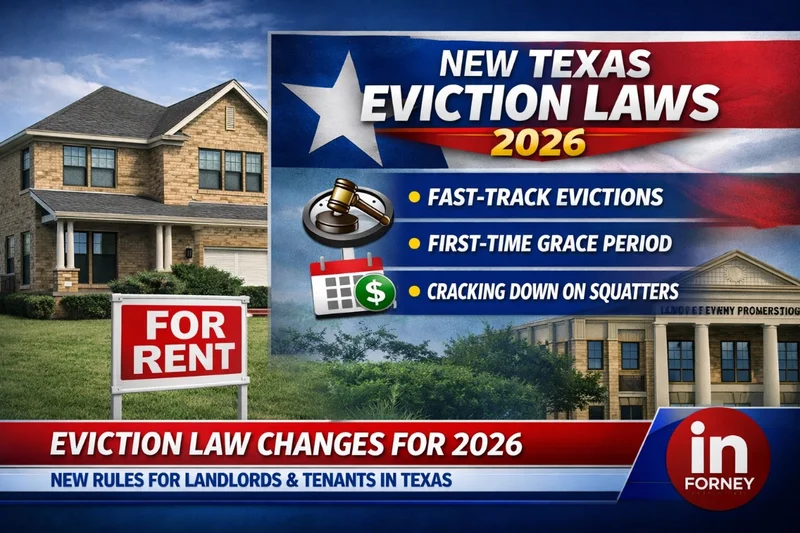
As we ring in 2026, Forney residents and property owners alike are facing a significant shift in the local housing landscape. Effective January 1, 2026, Senate Bill 38 (SB 38) has officially overhauled the Texas eviction process, aiming to modernize procedures while speeding up cases involving unauthorized occupants.
For Kaufman County landlords, the new law promises a "rocket docket" for certain cases, while tenants gain a specific new protection against immediate eviction for their first late rent payment. Here is what you need to know about the new rules governing your home or rental property.
Major Changes to Notice and Filing
One of the most immediate shifts involves how landlords must notify tenants of a problem. The 2026 law expands the legal ways a "Notice to Vacate" can be delivered.
Electronic Notices: Landlords can now send notices via email or online portals if the tenant agreed to this method in writing (such as in the lease).
The "First-Time" Grace Rule: If the only issue is unpaid rent and the tenant has only been late once during the lease term, the landlord must provide a "notice to pay rent or vacate". This gives the tenant a chance to pay and stay. However, if rent is late more than once, the landlord can proceed directly to a standard "notice to vacate," which does not require them to accept the late payment.
Faster Service: Once a case is filed in Justice Court, constables now have a strict five-business-day window to attempt service of the citation to the defendant.
Cracking Down on "Squatters"
A central pillar of SB 38 is the expedited removal of unauthorized occupants or "squatters." In cases where a person entered the property without permission and refuses to leave, the court can now use a summary disposition.
If the landlord provides enough evidence that the occupant has no legal right to be there and there are no disputed facts, a judge can issue an eviction judgment without a full trial. This process can result in a judgment in as few as five days after filing if the occupant fails to respond within four days.
The New Appeals Process
For those who lose an eviction case, the rules for staying in the property during an appeal have tightened significantly.
Rent Must Be Paid: To remain in the property while an appeal is pending in County Court, the tenant must pay one month's rent into the court registry within five days of filing the appeal. They must continue to pay rent into the registry as it becomes due.
"Good Faith" Affirmation: Tenants filing an appeal must now affirm, under penalty of perjury, that they have a "meritorious defense" and are not appealing simply to delay the process.
Immediate Removal: If a tenant fails to pay the required rent into the court registry at any point during the appeal, the landlord can obtain a writ of possession to have them removed immediately, even before the county court hears the case.
Outline of the 2026 Eviction Laws
Jurisdiction: Cases must be filed in the Justice of the Peace precinct where the property is located.
Possession Only: Justice courts now focus almost exclusively on possession. Counterclaims (such as a tenant suing for a security deposit) are no longer allowed in the eviction suit and must be filed separately in small claims court.
Standardized Fees: The filing fee for an eviction petition is $54, and a jury trial request costs $22.
Strict Timelines: Trial dates must now be set between 10 and 21 days from the date of filing.
Statewide Uniformity: The law prevents local governments or the governor from pausing evictions during emergencies, ensuring the process remains consistent across all 254 Texas counties.
Learn More
For more detailed information or to find legal assistance, visit these resources: