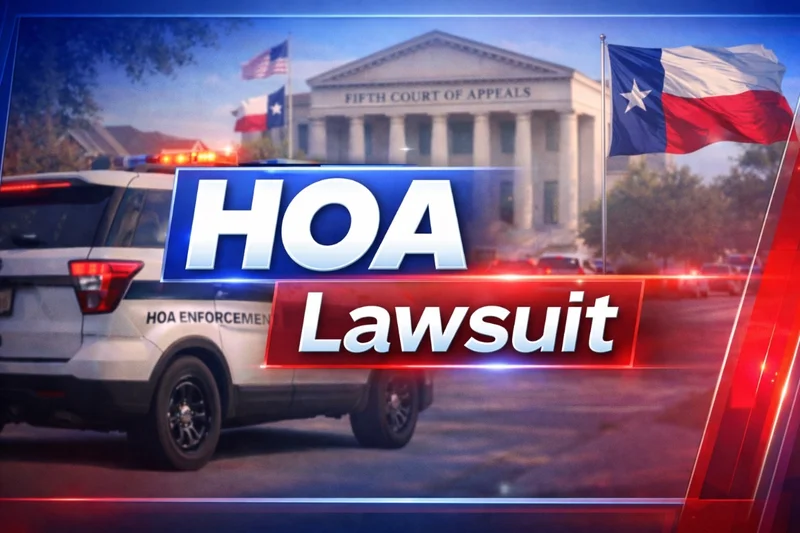
A contentious legal battle that echoes the concerns of many North Texas residents is unfolding as the Texas Court of Appeals weighs in on the authority of homeowners associations (HOAs). At the heart of this dispute is a case involving the The Shores at Lake Ray Hubbard Owners Association and several of its residents, including Brandy and Dwayn Lutz, challenging the HOA's power to impose fines for parking on public streets.
Originating in Rockwall County, this case has broader implications for the ongoing debate over private governance versus public property rights—an issue that resonates with residents in Forney, where HOA policies frequently spark community discussions.
The Battle Over the Curb
The conflict erupted when the HOA began issuing fines to residents for parking on neighborhood streets. According to court documents:
The HOA interpreted its governing documents as granting it the authority to fine residents for any vehicle parked on the street.
Residents contended that since the streets are publicly owned and maintained by the City of Rockwall, a private entity like an HOA should not impose restrictions on their use.
The City of Rockwall intervened, asserting that the HOA was attempting to exercise control over city streets, a power reserved for local government.
HOA Actions Under Fire
The lawsuit has brought to light aggressive enforcement tactics employed by the HOA. The Lutzes, who are in a "lease-to-own" agreement for their home, faced numerous warnings and notices. The situation escalated when:
The HOA reached out to the Lutzes' leasing company, claiming the company was responsible for the fines.
This prompted the leasing company to threaten the Lutzes with voiding their lease if the alleged parking violations persisted.
Residents further accused HOA directors of breach of fiduciary duty, alleging they were "wrongfully collecting money" and putting residents at risk of "wrongful foreclosure".
What the Court Found
The case made its way to the Fifth District Court of Appeals in Dallas after a lower court issued a ruling that left both sides dissatisfied. On January 21, 2026, the appellate court issued several key findings:
Standing to Sue
The court reversed a previous ruling that denied the Lutzes the standing to sue due to their status as renters. The court determined that their rights were directly impacted by the HOA's actions.
Street Regulation
The court acknowledged the HOA's argument that it was not "regulating" streets but merely "enforcing a contractual rule." However, the distinction between the two remained a significant point of contention.
Outcome
The appellate court reversed and remanded the case, sending it back to the trial court for further proceedings aimed at clarifying whether the HOA's enforcement actions represent an illegal regulation of public streets.
Why This Matters for Forney
This case serves as a crucial reminder for Forney residents about the intricate relationship between private HOA regulations and public law. While HOAs possess broad authority to govern activities on private property, their capacity to penalize actions on public infrastructure remains a complex legal issue that Texas courts continue to navigate.