As Forney continues to experience rapid growth, discussions regarding housing affordability and the role of the federal Housing Choice Voucher program, commonly known as Section 8, have become a focal point for many residents. City officials are currently balancing the complexities of local developm...
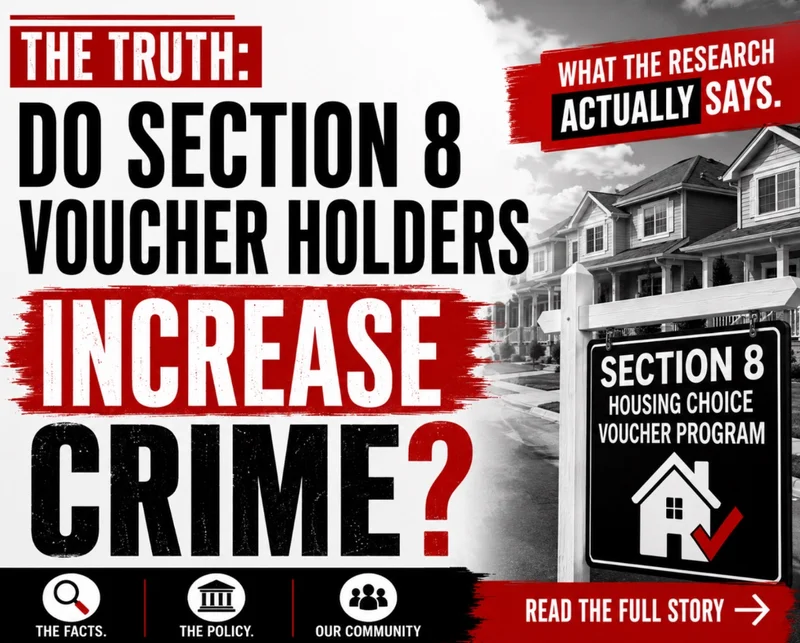
Do Section 8 Voucher Holders Actually Increase Crime in a Neighborhood?
As Forney continues to experience rapid growth, discussions regarding housing affordability and the role of the federal Housing Choice Voucher program, commonly known as Section 8, have become a focal point for many residents. City officials are currently balancing the complexities of local development with the need to engage regional partners on how these federal programs operate within our community.
A representative for the City of Forney confirmed in a comment on Facebook, that the Mayor and City Council have taken formal steps to address concerns regarding housing concentration. The Council recently approved a resolution supporting state legislation aimed at regulating institutional investor ownership of single-family homes. Furthermore, the city is actively engaging with the Dallas Housing Authority to discuss the concentration of housing vouchers in the area. While the city does not set federal housing policy, local leadership maintains that they are working to ensure that growth in Forney remains sustainable and balanced.
What is the Housing Choice Voucher Program?
The Housing Choice Voucher program is a federal initiative funded by the U.S. Department of Housing and Urban Development. It acts as a lifeline for low-income families, veterans, the elderly, and individuals with disabilities. The program allows participants to rent privately owned homes or apartments by providing a subsidy that covers the difference between what a household can afford and the actual cost of rent.
Nationally, the program serves a diverse demographic. According to fiscal year 2022 data, the average annual income for voucher-holding households was approximately $16,142, with the majority of income coming from Social Security, disability benefits, or pensions. For many, these vouchers provide a critical bridge to stable living conditions.
Addressing Common Misconceptions
A persistent concern in many growing communities is the belief that the presence of voucher holders leads to increased crime or declining property values. However, researchers at institutions such as the NYU Furman Center have analyzed these claims extensively. Multiple studies, including a 2011 analysis and the 2012 Memphis Murder Mystery Revisited study, found no causal relationship between voucher recipients and rising crime rates. Instead, researchers discovered that voucher holders often move into areas where crime levels were already elevated, largely due to the lower housing costs found in those neighborhoods.
A 2022 study by the University of California, Irvine, examined the effects of affordable housing in Orange County, California. Researchers found that affordable housing developments were linked to reduced crime rates and even an increase in surrounding property values.
A 2024 econometric analysis by a Colgate University researcher examined affordable housing policies, including the Low-Income Housing Tax Credit (LIHTC). The study found that areas qualifying for LIHTC experienced decreases in both property and violent crime.
While some other studies, such as a 2014 report focused on Houston, suggested potential links to increased police interactions, the broader consensus among urban policy experts is that housing vouchers are not a direct driver of crime. Rather, experts suggest that safe and stable housing is a foundational requirement for families to improve their long-term economic outlook.
Houston Study: Increase in Arrests Among Voucher Recipients
A 2014 study by Jillian Carr examined Section 8 recipients in Houston, Texas, using a randomized lottery system. The study found that adults who received housing vouchers experienced a 95% increase in the likelihood of being arrested for violent offenses compared to those who did not receive vouchers. Male recipients, in particular, saw their chances of arrest more than double.
Navigating Housing Assistance in Forney
Forney residents seeking information about housing assistance should note that the city does not operate its own municipal housing authority. Instead, residents must work with regional agencies that hold jurisdiction over Kaufman County.
Terrell Housing Authority: This agency administers over 450 vouchers and holds primary jurisdiction over Kaufman County, including Forney.
Dallas Housing Authority: As a major regional provider, the DHA manages a large-scale program that may also serve surrounding areas.
Eligibility for these programs is strictly regulated. Applicants must meet specific income thresholds, which in Kaufman County generally require households to earn 50 percent or less of the Area Median Income. Priority is typically granted to those at or below 30 percent of the median income. All applicants are subject to federal background screenings and income verifications.
Local Accountability and Standards
As the city grows, maintaining the quality of rental housing remains a priority. While private landlords in Forney may choose to accept housing vouchers, they remain subject to the City of Forney’s rental registration and code enforcement programs. These measures are designed to ensure that all properties—regardless of the payment method—meet local safety and maintenance standards.
Participants in the voucher program are also held to high standards. Any involvement in criminal activity or significant lease violations can lead to the immediate loss of assistance. Through this combination of federal oversight and local code enforcement, the city continues to monitor how these programs interact with the broader goal of maintaining a safe and thriving Forney for all residents.