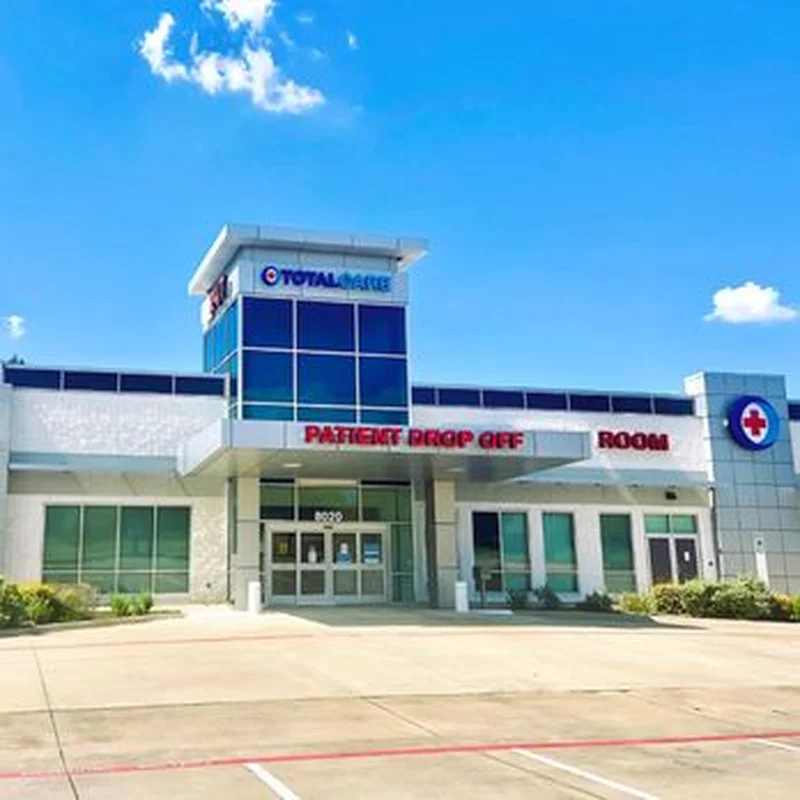
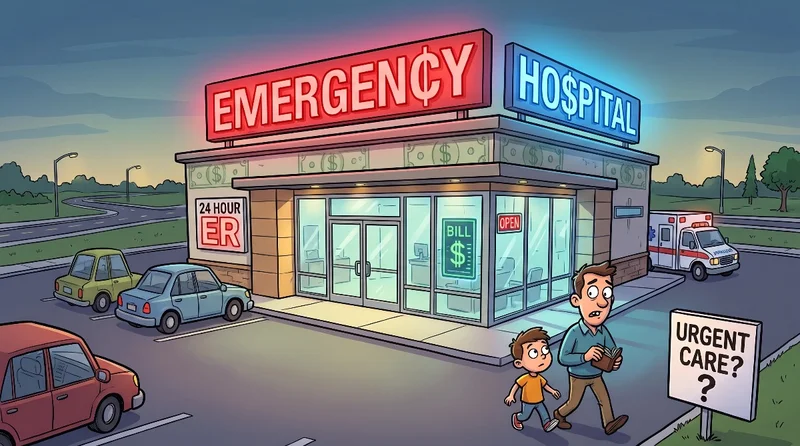
Drive down the main thoroughfares of Forney, or along the expanding commercial corridors of Kaufman County, and the visual markers of a booming suburban economy are unmistakable. Beside the new grocery stores, chain restaurants, and retail strip centers sit small, pristine medical buildings. Their signage is bright,Urgent red letters announce twenty-four-hour emergency care, promising short wait times and immediate clinical attention just minutes from the newer master-planned subdivisions.
To a parent managing a child’s midnight fever or a commuter nursing a wrenched back, these facilities look virtually indistinguishable from standard walk-in urgent care clinics. They share the same commercial zoning,the same convenient parking lots, and the same welcoming storefront architecture.
Yet behind the sliding glass doors lies a starkly different financial reality. These facilities are freestanding emergency departments, or FSEDs. Unlike urgent care centers, they are licensed and billed as full-scale emergency rooms, completely detached from a physical hospital. As several of these centers have opened in Forney over the past few years to capture the rapid influx of new residents, health economists, consumer advocates, and state regulators are pointing to a troubling body of research. Across Texas, the proliferation of freestanding emergency rooms has become synonymous with opaque pricing, aggressive coding, and crippling medical bills for routine illnesses.
The Business of Suburban Growth
Texas is the undisputed capital of the freestanding emergency industry. In 2009, the state Legislature passed a law allowing emergency rooms to operate independently of hospitals, originally sold to lawmakers as a way to expand acute medical access to rural communities suffering from hospital closures.
The actual market went in the exact opposite direction. According to research led by Dr. Vivian Ho at Rice University’s Baker Institute for Public Policy, freestanding emergency centers in Texas overwhelmingly bypassed rural counties, clustering instead in rapidly growing, affluent suburban ZIP codes with high rates of private health insurance. Forney, which has transitioned from a quiet agricultural town into one of the fastest-growing suburban communities in the Dallas-Fort Worth metroplex, fits the industry’s target demographic with precision.
Today, more than 350 freestanding emergency facilities operate across Texas, accounting for over a quarter of all emergency department visits in the state. Some operate as independent, private-equity-backed businesses, while others function as outpatient satellites of major regional hospital systems. Both models share a fundamental financial mechanism: the ability to charge emergency room facility fees.
Urgent Care Illnesses at Emergency Room Prices
The central ethical concern surrounding freestanding emergency rooms is not the quality of their physicians or the cleanliness of their exam rooms. It is the widening chasm between the acuity of the illnesses they treat and the prices they extract from patients and insurance pools.
When a patient visits an urgent care clinic for a sore throat, a minor laceration, or a sinus infection, the bill reflects a standard outpatient clinic visit. When that same patient walks into a freestanding ER, the billing structure mirrors that of a major metropolitan trauma center. Every visit triggers a "facility fee," an overhead charge originally designed to subsidize the massive expense of maintaining a twenty-four-hour full-service hospital complete with operating rooms, intensive care units, and charity care obligations. An estimated 93 percent of Texas freestanding ERs charge this fee, which adds over $1,000 to the baseline cost of a visit before a doctor even orders a test.
A landmark study published in the Annals of Emergency Medicine examined insurance claims across Texas and uncovered a glaring inefficiency. The researchers found a 75 percent overlap between the twenty most common diagnoses treated at freestanding ERs and those treated at traditional urgent care clinics. Despite treating the exact same minor ailments, such as respiratory infections, earaches, and sprains, freestanding ERs charged prices that were, on average, nearly ten times higher than urgent care centers.
A separate comparative cost analysis by UnitedHealth Group painted an even starker picture of the Texas market. Researchers found that only 2.3 percent of visits to freestanding emergency departments nationwide actually involved genuine medical emergencies requiring services unique to an ER. In Texas, the average cost of treating ten common, non-emergent conditions at a freestanding ER was $3,217, compared to $167 at an urgent care clinic and $146 at a primary care doctor’s office. Treating a simple case of strep throat at a Texas freestanding ER averaged $2,732, which is seventeen times the cost of an urgent care visit. Basic lab, pathology, and radiology services averaged $785, roughly thirty times more than at a traditional physician's office.
At the same time, patients suffering from severe, life-threatening crises often have to be transferred elsewhere.Fewer than one in four freestanding ERs in Texas receive ambulance traffic, and patients experiencing major trauma, severe strokes, or complex cardiac events must ultimately be transported to a full-service inpatient hospital, sometimes resulting in two separate emergency room bills for a single medical crisis.
The Debt After the Visit
For years, patients across Texas reported receiving five-figure "surprise bills" after visiting freestanding ERs that were out-of-network with their insurance providers. The public outcry grew so severe that the Texas Legislature passed multiple reform packages, including Senate Bill 1264, which banned balance billing for state-regulated insurance plans. The federal No Surprises Act followed, shielding patients on employer-sponsored plans from out-of-network emergency rate gouging.
However, billing reform has not eliminated the financial pain for consumers. Because freestanding ERs are legally classified as emergency rooms, insurance companies are required to cover the visits under prudent layperson standards. Yet insurers routinely apply those massive, hospital-level allowed amounts directly to a patient’s annual deductible. For a Forney family carrying a high-deductible health plan, a thirty-minute visit for a child’s ear infection or a mild allergic reaction can easily result in an entirely legal, in-network out-of-pocket bill of $1,500 to $2,500.
The broader economic consequences on communities are measurable. A study published in JAMA Network Open and indexed by the National Library of Medicine analyzed credit bureau data across counties where satellite freestanding emergency departments opened. The researchers discovered that the entry of freestanding ERs into a county was directly associated with a statistically significant increase in the local population's medical debt in collections. Two years after these facilities entered a community, median medical debt in collections rose by 15 percent. In counties with a heavy concentration of freestanding facilities, median medical debt surged by more than $577 per person among affected borrowers.
A Failure of Transparency
The core ethical dilemma rests on informed consent. In almost every other sector of the American economy,consumers know the general tier of pricing before they commit to a purchase. In the suburban healthcare landscape, the lines are blurred by design.
Recognizing that Texans were routinely mistaking freestanding ERs for urgent care centers, the Texas Legislature passed House Bill 2041. The law requires freestanding facilities to post prominent physical notices and maintain clear disclosures on their websites detailing their status as an emergency room, their facility fees, their observation fees, and their insurance network participation. It also prohibited facilities from using deceptive advertising language, such as claiming they "take" or "accept" all major insurance plans when they are actually out-of-network.
Yet an exhaustive compliance study published in the medical literature reveals that the industry largely ignores these transparency mandates. Researchers evaluated all 351 freestanding emergency departments operating in Texas across the sixteen mandatory consumer protection parameters established by House Bill 2041.
The findings showed widespread non-compliance. Only 24 of the 207 independent freestanding ERs in Texas complied with all sixteen transparency requirements. Among the 144 hospital-owned satellite freestanding ERs, not a single facility achieved full compliance, and nearly half failed to meet even 50 percent of the state's transparency rules. Fewer than 35 percent of independent facilities and just 2.1 percent of hospital-owned facilities disclosed their median facility fees online. When it came to observation fees, which can quietly add thousands of dollars to a patient's bill if they are monitored for a few hours, zero percent of hospital-owned satellites and less than a quarter of independent facilities disclosed the range of those fees on their websites.
Under Texas law, the penalty for failing to post these disclosures is up to $1,000 per violation. Without aggressive state enforcement, however, researchers noted that the financial reward of keeping patients in the dark far outweighs the regulatory risk.
What Forney Residents Face
For a rapidly expanding community like Forney, infrastructure often lags behind population growth. As families move into Kaufman County faster than primary care clinics and full-service hospital infrastructure can scale to meet them, convenient medical care becomes a vital necessity. Freestanding emergency rooms fill a very real geographic gap, and during a genuine crisis, such as a severe asthma attack or chest pain, having a board-certified emergency physician minutes away can be life-saving.
The ethical breakdown occurs in the gray hours of everyday sickness, when a resident who needs a simple prescription, a few stitches, or a flu swab is drawn toward an illuminated "Emergency" sign on the side of the highway. Until state regulators actively enforce pricing transparency, the burden of self-defense falls entirely on the patient sitting in the waiting room, forced to decipher the fine print before a nurse calls their name.
Learn More
Freestanding Emergency Department Compliance with Consumer Protections (National Library of Medicine / PMC): An evaluation of all 351 freestanding ERs in Texas showing widespread failure to disclose facility and observation fees under Texas House Bill 2041.https://pmc.ncbi.nlm.nih.gov/articles/PMC13186269/
Medical Debt and Entry of Satellite Freestanding Emergency Departments (National Library of Medicine / PMC): A study demonstrating how the opening of freestanding ERs in a county correlates with a significant increase in local medical debt in collections.https://pmc.ncbi.nlm.nih.gov/articles/PMC12287832/
Comparing Utilization and Costs of Care in Freestanding Emergency Departments (Annals of Emergency Medicine / Rice University): Dr. Vivian Ho’s foundational research showing that Texas freestanding ERs treat the same common illnesses as urgent care clinics at nearly ten times the price.https://repository.rice.edu/server/api/core/bitstreams/a533a07f-cec4-4f13-89fa-fe7b48bff15e/content
Freestanding Emergency Departments: Treating Common Conditions at Emergency Prices (UnitedHealth Group): A comprehensive cost breakdown of Texas claims data, highlighting the $3,217 average cost for non-emergent visits and the impact of facility fees.https://www.unitedhealthgroup.com/content/dam/UHG/PDF/2017/Freestanding-ER-Cost-Analysis.pdf
Texas Legislature Passes Bills Reining in Freestanding Emergency Rooms (The Texas Tribune):Reporting on the legislative history, patient complaints, and regulatory battles over price gouging and surprise billing in Texas. https://www.texastribune.org/2019/06/03/freestanding-emergency-centers-bills-legislature/
Surprise Medical Bills and Consumer Protections (Texas Department of Insurance / Texas Health Resources): Official guidance on patient billing protections under Texas Senate Bill 1264 and the federal No Surprises Act. https://www.texashealth.org/Costs-and-Billing/Federal-Surprise-Billing-Act